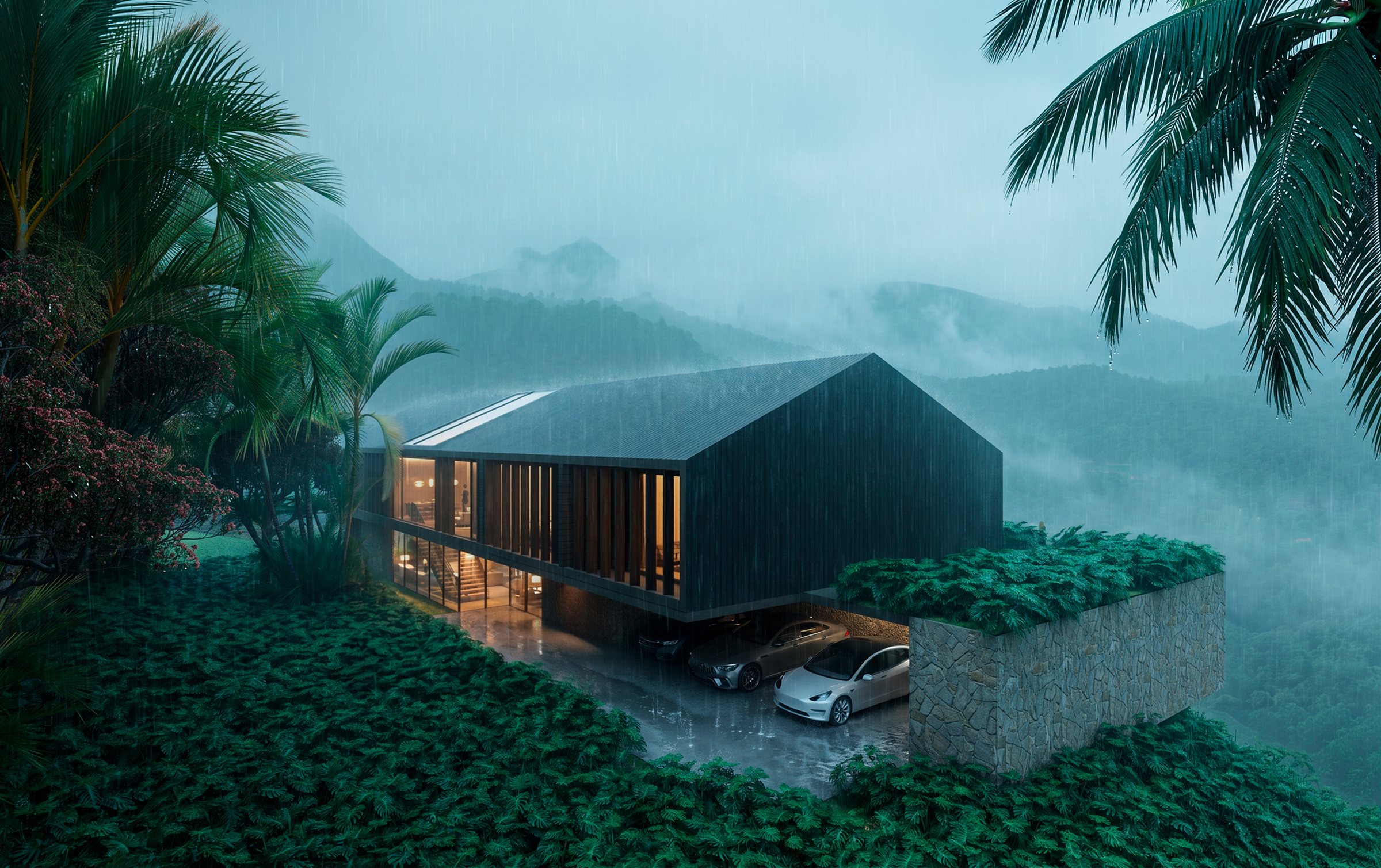
Filtered light (cobogó)
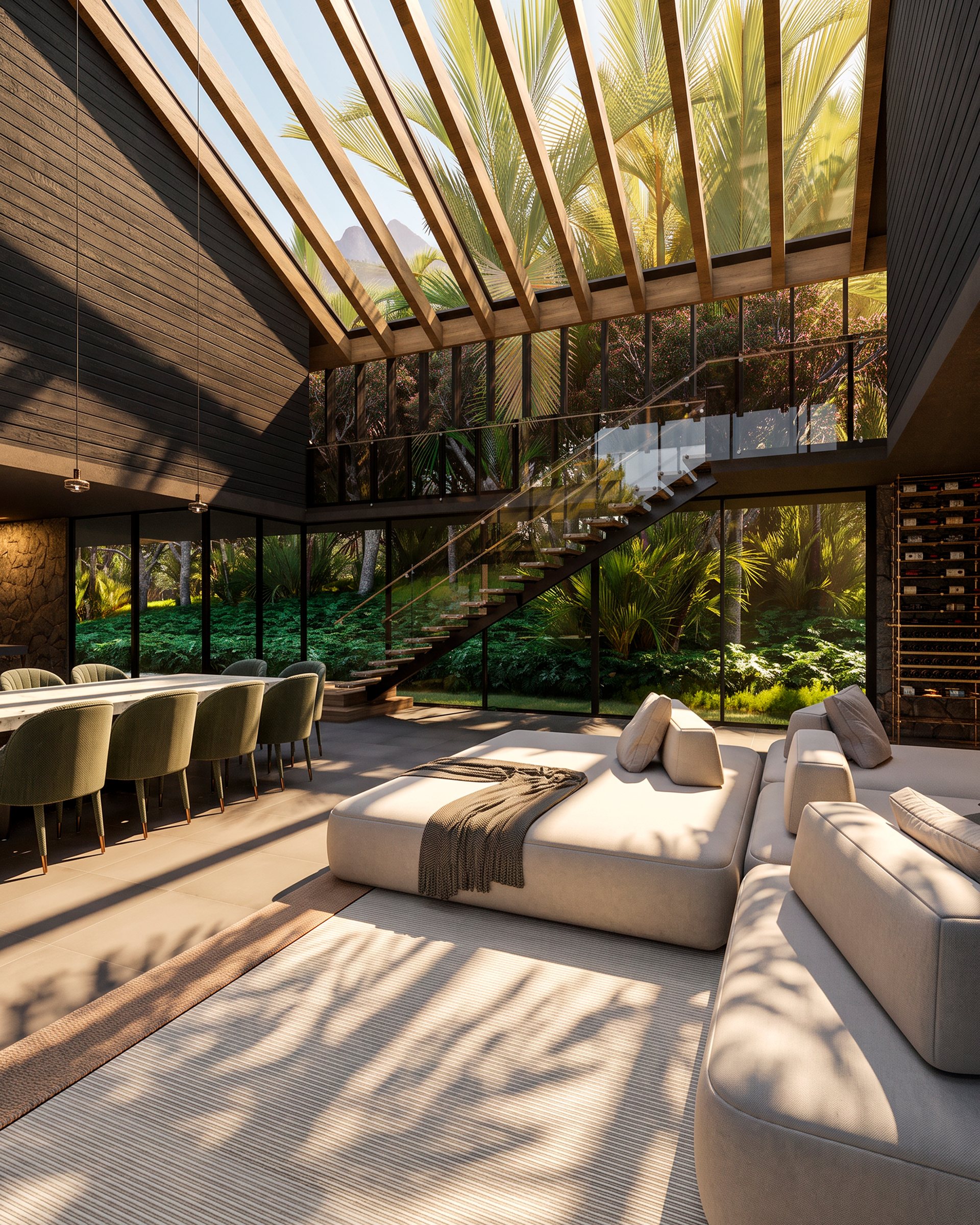
Cobogó, brise-soleil or tree canopy. The shadow pattern becomes the subject of the image.
- What it sells
- A house designed for the sun. The shadow pattern reads as comfort, not just style.
- Best for
- Hot climates, and interiors with screens, louvers or pergolas.
Cobogós, the perforated breeze-block walls of Brazilian modernism, along with brise-soleils and tree canopies, turn hard sunlight into patterns. In this atmosphere the shadow is the subject.
The interior stays dark, the exposure is set for the patches of light, and a thin volume makes the rays visible.
The recipe
| Sun | hard, no softness |
|---|---|
| Interior | dark, exposed for the light patches |
| Fog | a thin volume for the rays |
| Camera | looking toward the filtered sun |
| Post | don’t blow out the patches |
Starting points for Corona or V-Ray, not rules.
Step by step in 3D
- Use a hard sun with no extra softness, angled so the pattern lands on the floor and the walls.
- Expose for the light patches and let the interior fall dark.
- Add a thin volumetric medium indoors so the rays read.
- Point the camera toward the filtered sun to get rays and glow.
- Keep the materials simple, such as concrete, wood and plaster, so the pattern stays readable.
Post-production
Don’t let the patches clip: recover the highlights and keep a little dust in the rays.
Where to study it
Lina Bo Bardi, Lavoura Arcaica. The reference library says what to look at in each one.
A starting phrase
Filtered light, mid-morning, March, after the rain. The table is still set. 35 mm lens at eye level, an interior looking out.
Write the moment in one sentence before you model, then check the render in the value study tool. The other six atmospheres are in the Atmosphere Notebook.